A shampoo ritual can be a small way to return to yourself. A headspa routine begins with three quiet questions: does the scalp feel comfortable, is the hair still wet, and what kind of care would make today easier? A considered routine does not add more force. It removes the friction you do not need.
Keep the scalp light and the lengths gentle
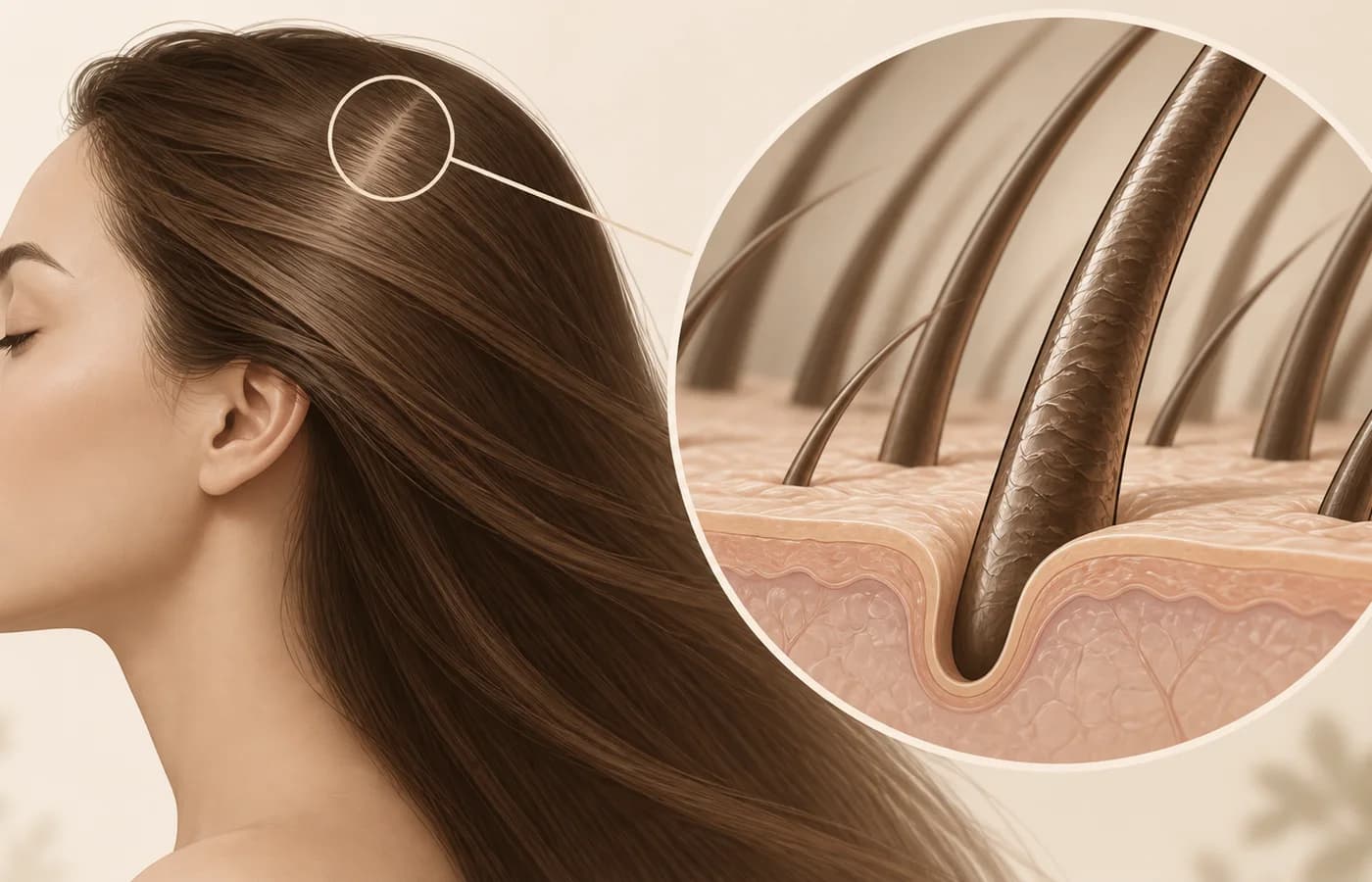
The scalp is skin; the hair is a keratin fibre outside the skin. Pressure at the roots and friction through wet lengths should never feel like the same motion. Use a light touch at the scalp, then move slowly from the ends upward when you need to detangle.
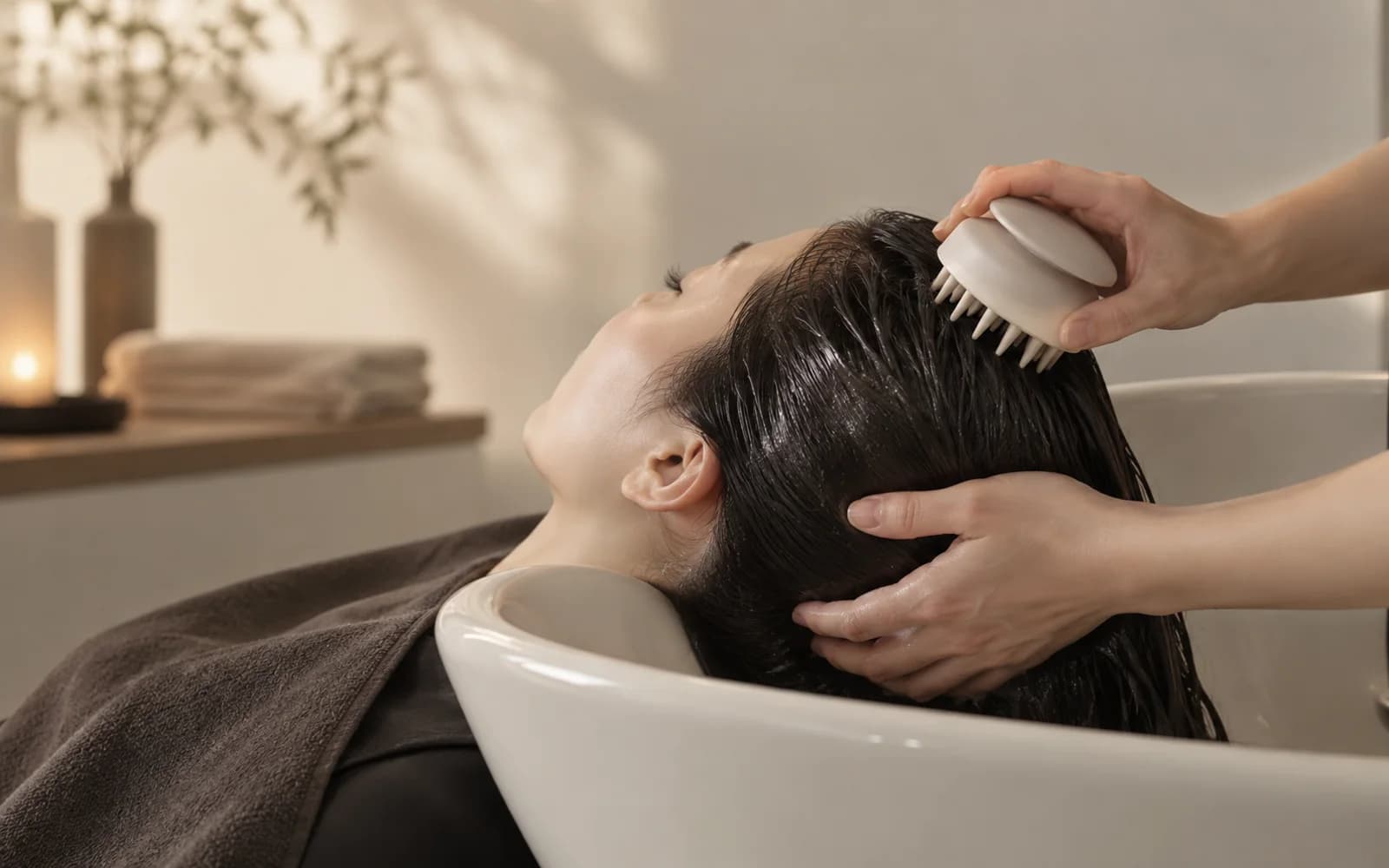
If you use a brush, let it be a quiet aid for spreading lather. Clean hair does not require a set number of passes. Wet hair is especially delicate, so the AAD guidance to use a wide-tooth comb from the ends upward is a useful reference. A study of hair surface changes3 also reminds us that repeated washing and towel drying can add physical friction.
Shampoo for the scalp, conditioner for the lengths
Rather than scrubbing every strand, place shampoo where oil and build-up collect: at the scalp. Let the lather and water move through the lengths so the ends keep the softness they need.
Conditioner is there to reduce tangling and make the lengths easier to handle. For fine, straight hair, the AAD recommendation favours the ends; for dry or curly hair, it can extend through more of the length. Follow the product directions and your hair’s current condition instead of reading a cosmetic ingredient as a diagnosis or a permanent repair.
One keratin hydrolysate study4 tested a specific formulation on forearm skin, not a salon treatment on human scalp or hair. It is useful context for reading product claims, not a promise that every treatment can restore hair from within. In the salon, we keep the language as precise as the work.
A calm order after shampoo
- Wet the hair thoroughly, apply shampoo mainly to the scalp, and use a soft brush only at a comfortable pressure.
- Rinse from the roots and let the water carry the lather through the lengths.
- Apply conditioner to the lengths and ends according to the label, then rinse well.
- Press out water with a towel or T-shirt. Do not rub wet hair or pull hard through knots.2
If a brush brings stinging, redness or lasting discomfort, stop. Sudden heavy shedding, discharge or ongoing itch belongs with a dermatologist, not a stronger brush. This column is a care perspective, not a diagnosis; a salon consultation can help you choose a gentler next step.
Four things to remember
- Keep shampoo at the scalp and unnecessary friction away from the lengths.2
- Treat wet hair with a wide-tooth comb and an ends-first motion.2
- Choose conditioner and treatment for the product directions and the hair you have today.
- Stop when care feels uncomfortable, and ask a professional about symptoms that persist.
References
- JUNO HAIR POSCO Intersection Shorts — the original routine video.
- American Academy of Dermatology, “Tips for healthy hair” — shampoo, conditioner and wet-hair guidance.
- Hair surface damage study, Annals of Dermatology 2011 — observations of friction during washing and drying.
- Keratin hydrolysate cosmetic study — a specified formulation tested on forearm skin.