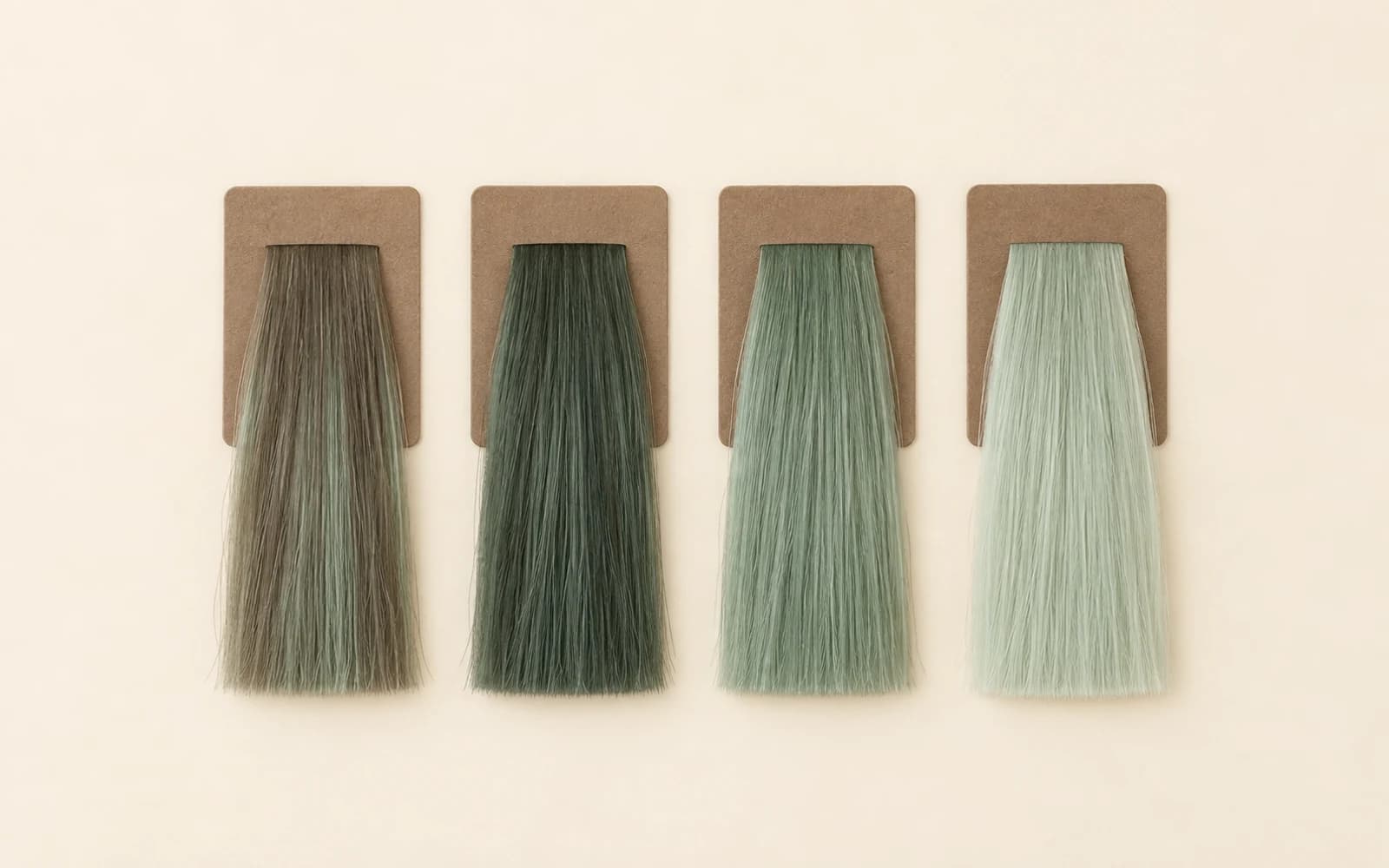
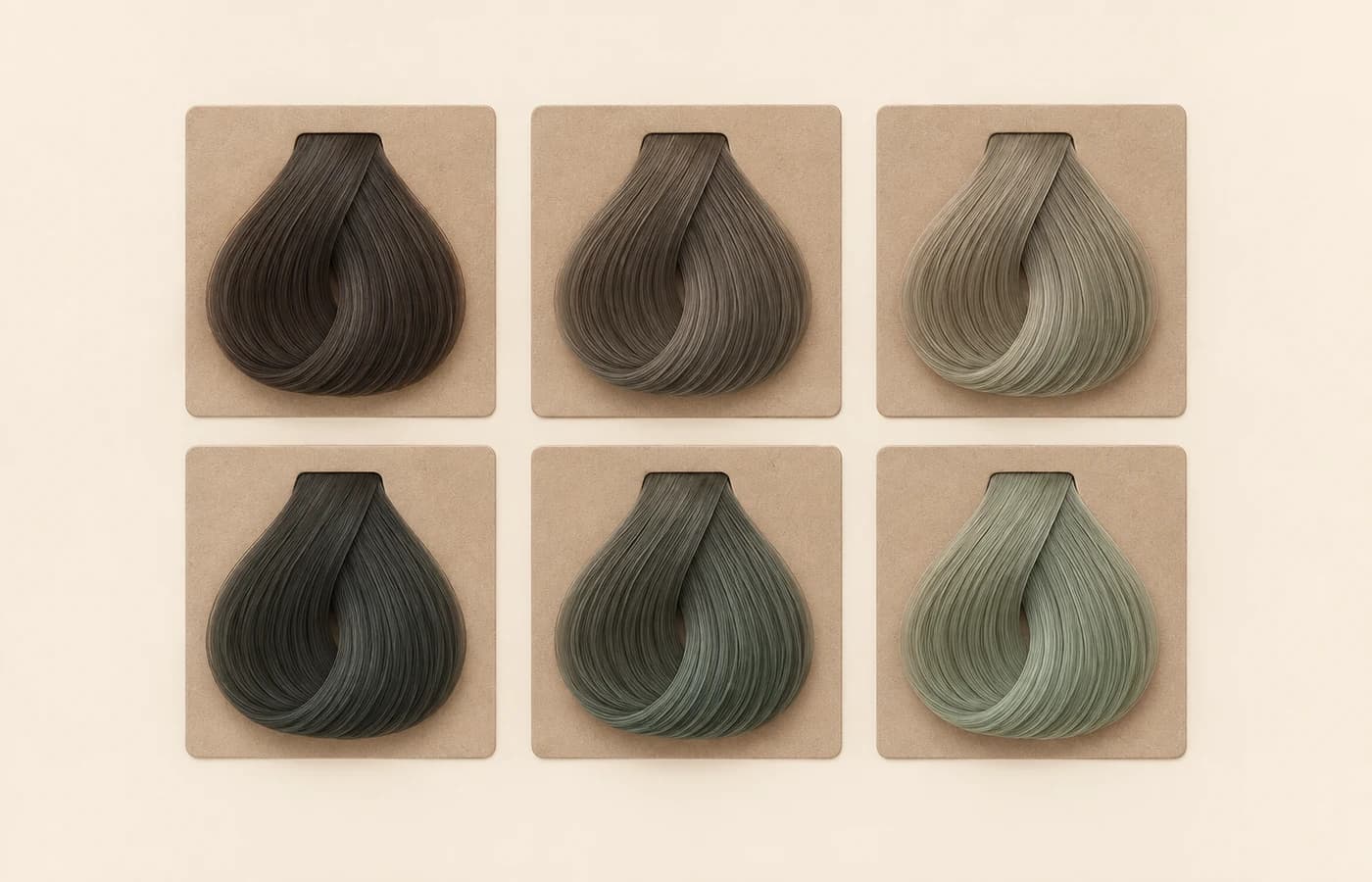
If you are considering mint for an autumn hair color, start by sorting out what matters to you rather than relying on the color name alone. Even with the same mint tone, the options differ depending on how light you want it and how strongly you want the mint to show. Instead of treating a favorite photo as the answer, compare lightness, tone intensity, and the impression you want; this can make it easier to explain your preferences during a consultation.1
Lightness is one of the first points to compare
Lightness describes how light or dark you want the color to be. Even if you like the mint tone, consider separately whether you also want the overall lightness shown in a photo. Compare lighter and darker mint shades side by side; although they share a color name, this can help you describe the range of lightness you prefer.1
When choosing reference photos, set the mint tone's intensity aside for a moment and compare lightness alone. Pick one photo you like and one that feels too light or dark, then explain your boundary—for example, “I like about this level of lightness, but I don't want it any lighter.” This is about finding what feels comfortable to you, rather than setting a lightness that is supposed to suit everyone.
Consider the intensity of the mint tone separately
Tone intensity describes how subtly or distinctly you want the mint to show. Saying that you want a lighter color does not necessarily mean you want a stronger mint tone. Treat lightness and the degree of mint as two elements to choose together, and describe your preference for each.1
Comparing swatches with similar lightness but different mint intensity can help narrow down your questions. You can combine elements from different photos—for example, “I like this one's lightness, but I want the mint to be as subtle as in that one.” Use an illustrative palette to distinguish these two points, without expecting its colors to show an actual treatment result.
Put the impression you want into words
Choosing a color involves both your color preferences and the impression you want. L’Oréal Professionnel's general consultation guidance treats skin tone and hair characteristics as reference points, and says there are no absolute rules. Instead of searching for a single correct color, discuss the style you want during your consultation.2
Write down the direction you have in mind, such as “calm,” “with the mint noticeable,” or “let the color show, but not look too bold.” These phrases do not promise a particular color effect; they are a starting point for discussing your preferences. People may understand the same words differently, so explaining them alongside photos with a similar feel can make the comparison more concrete.
Treat skin tone as one point of reference
Even if you know your skin tone, do not use that information alone to decide on a final color. General color consultations consider skin tone and hair characteristics together as reference points. Do not take this to mean that a particular type must choose a lighter or darker mint.2
If you know your skin tone, share that information during the consultation, along with colors you like and impressions you want to avoid. Rather than stopping at “Please choose a color that suits my skin tone,” try asking, “I like this lightness and mint intensity. What options could we compare after looking at my current hair too?” Skin tone is not a substitute for your preferences or information about your hair.
Bring reference images and note what you like about them
Wella's pastel color guide presents mint green as an example of a color. This manufacturer's material can be used as general reference when exploring color options. The label “pastel” or a single photo does not mean you will get the same result.3
After gathering photos, make a note of what you like in each one: lightness, mint intensity, or overall impression. If there are photos you dislike, briefly note what you would rather avoid. Even if your preferences seem different from one photo to another, explain which details appeal to you. Bring the images to help discuss your priorities, rather than asking for every photo to be recreated exactly.
Compare options during a consultation and choose your final color
During the consultation, first describe your preferred lightness and mint intensity, then explain which elements in your photos matter most. Compare color options while also considering the characteristics of your current hair. Guidance to choose lightness and tone intensity during a consultation is not a promise of a particular result.1 2
At the end, restate the options in your own words to make sure you understand them. For example: “I want to use this lightness as a reference and have the mint tone be more subtle—is that right?” If anything is unclear, compare the swatches or reference photos again. People differ in how they perceive colors and what they prefer. Use the points you have prepared to choose the final color during the consultation.
References
- Autumn hair color: Which shade might suit me? — The official video confirms a mint hair color suggestion and discusses choosing lightness and tone intensity during a consultation.
- How to explore a hair color before deciding — General guidance on considering skin tone and hair characteristics as reference points during a color consultation.
- A guide to choosing pastel hair color — General color-selection guidance from a manufacturer that presents mint green as an example of a pastel shade.